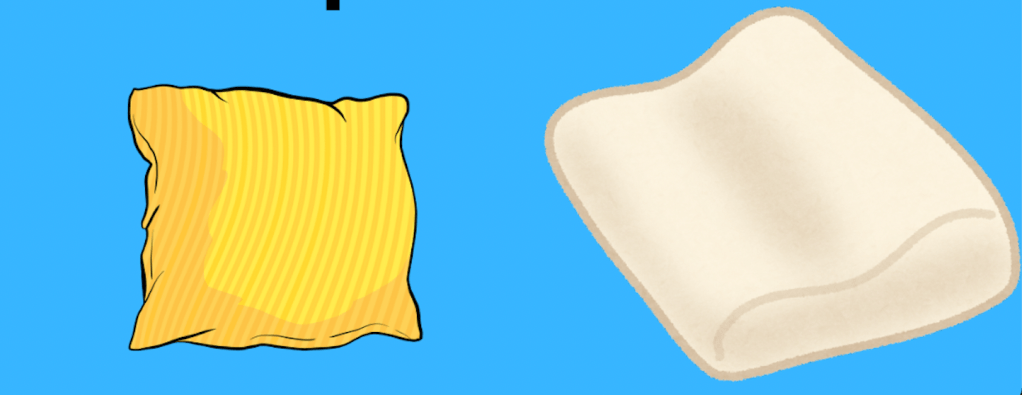
It is not uncommon for people with neck pain to experience pain or discomfort at night that affects comfort and sleep quality. What to do about this?! Well, popular culture suggests that the pillow is the problem and there are a plethora of specialized neck pillows that claim to deliver the best comfort, ergonomics, and pain relief.
Patients often come to physical therapy wanting to know what pillow I would recommend (i.e., what is medically and scientifically recommended) to reduce their neck pain. I have to admit that I have not always known what to recommend nor have I really read up on the matter until recently when a was challenged by a mentor to look into the evidence base for this!
So, recently I have been doing a deep dive into what the research indicates about pillow choices and their effect on pain and disability for people with neck pain and I think I have some better idea of what to recommend. From the studies that I read, it seems that the pillow that is rated as the most comfortable (individual preference) and keeps the head and neck relatively flat (i.e., “neutral” spine) have the best success in reducing neck pain and reducing neck pain related disability. Of course, there is a little bit more to it than that, so keep reading for some of what I discovered and will now be able to talk to my patients about.
Pillow Choices
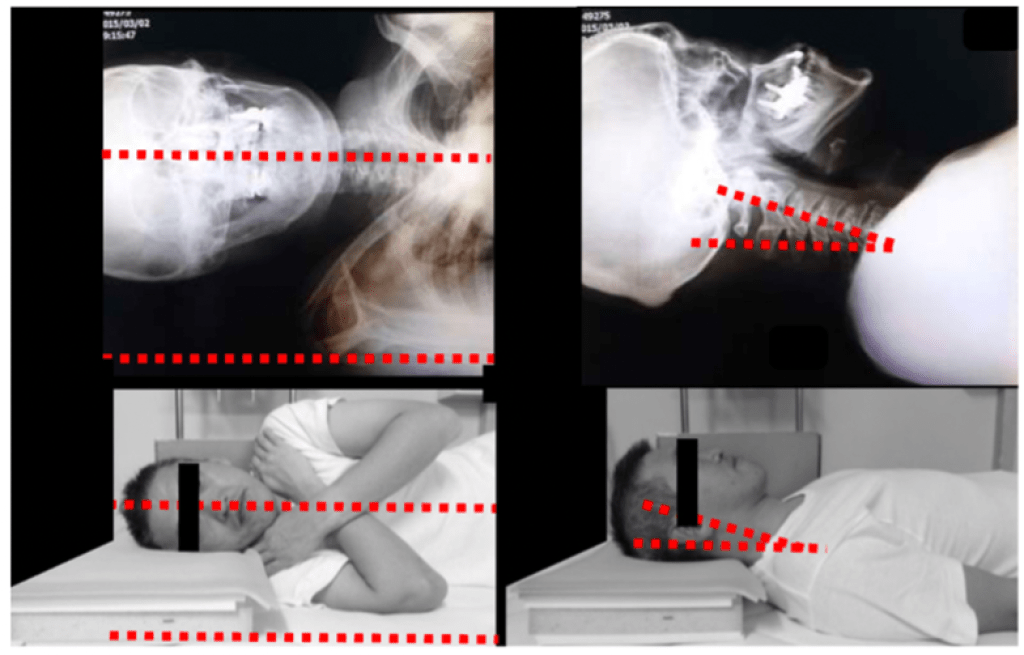
With so many pillows on the market, and so many variables to choose from, it can be hard to know where to start in finding the ideal pillow! Through my reading on this topic, I also learned more about pillow options and variables to consider when in search of your ideal pillow. The main factors to consider are pillow shape, material, and height. Generally, the position that is recommended in order to reduce tension on neck and shoulder muscles and strain on spine structures is a neutral spine (Lei, 2021; see picture below from Yamada, 2023):
To start off this discussion, let’s acknowledge that the majority of people sleep on their back (i.e., supine) or on their side (Lei, 2021). However, most people do not adopt just one of these positions but switch back and forth throughout a nights sleep. From one study, it was found that people without pain typically switch between these two positions an average of 24 times per night! (Cai, 2015). Given that people are switching so often between these two positions, it makes sense some of the research findings and best variables for the above factors:
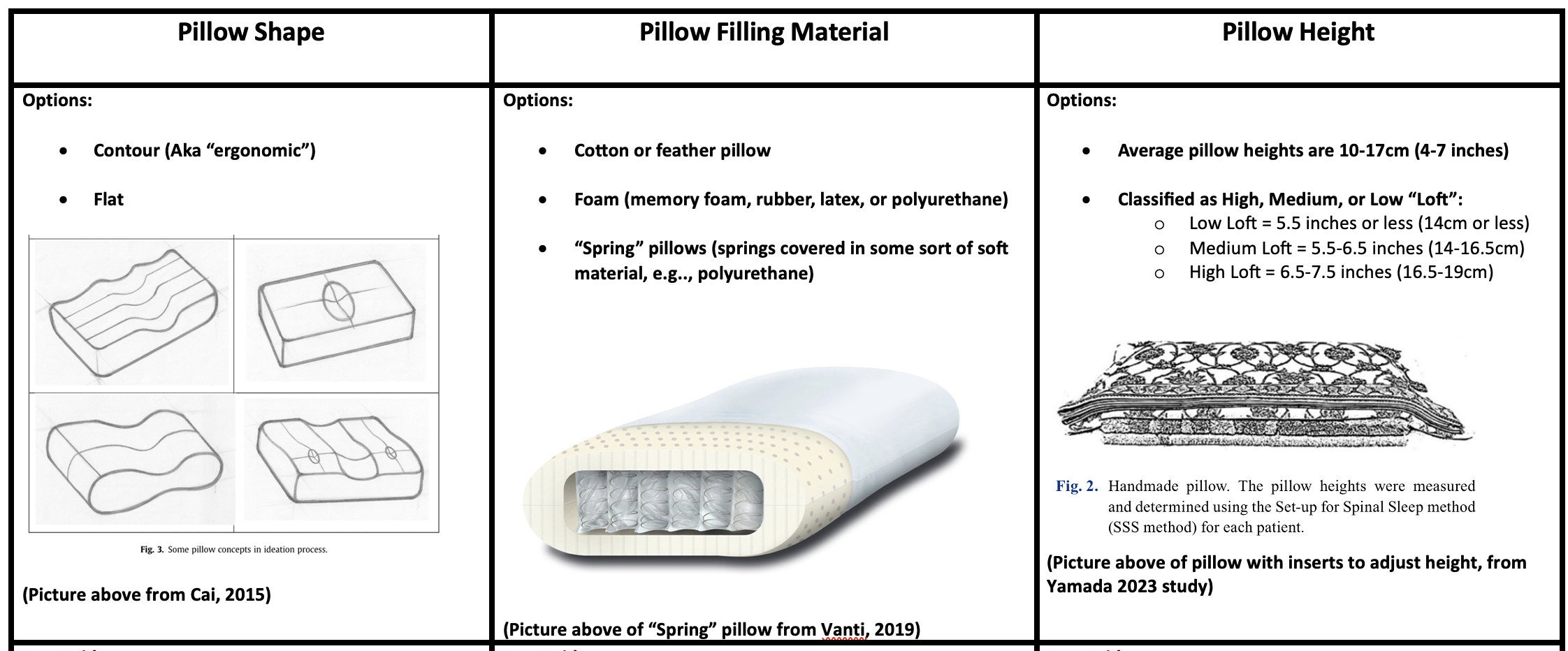
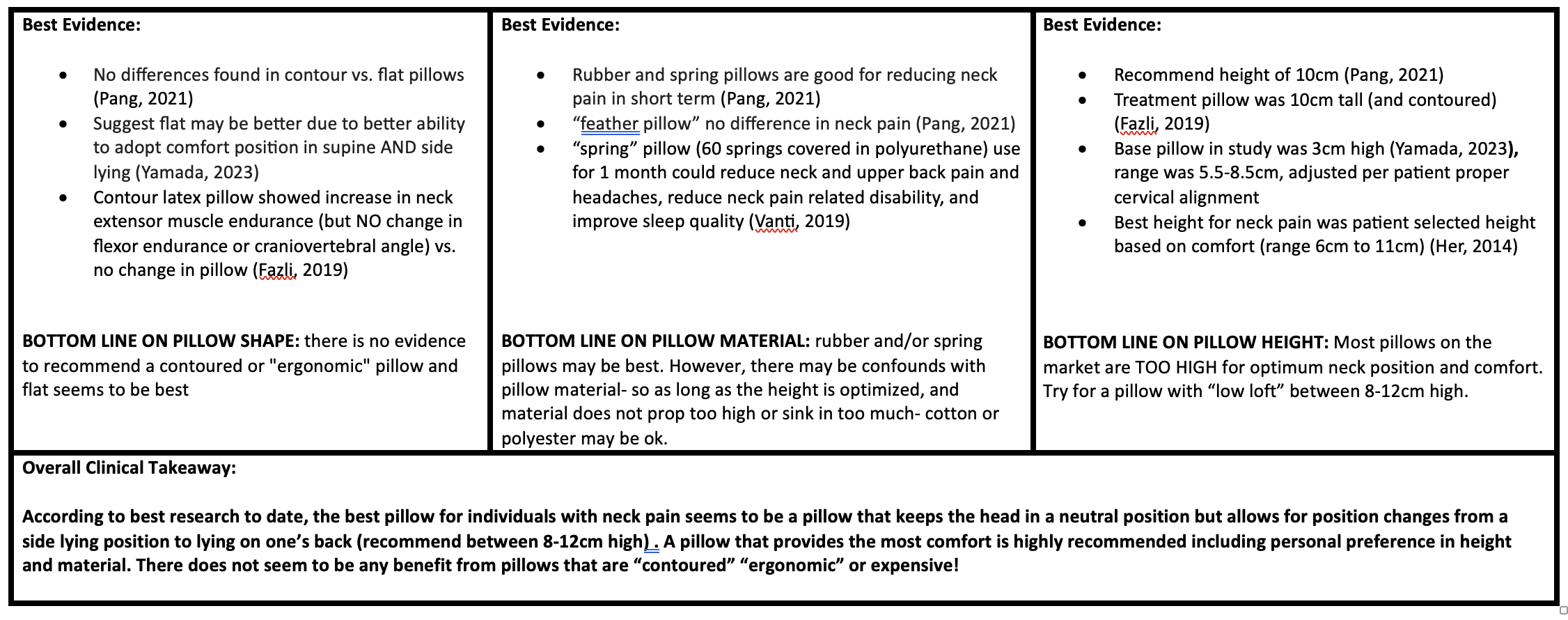
- Shape: There is no evidence to recommend a contoured or “ergonomic” pillow and flat seems to be best because it allows for the optimum height in both supine and side lying and allows for the expected position changes instead of holding the head and neck in a single “best” position
- Material: There does not seem to be one best material for pillow filling. Different studies have shown good reductions in neck pain when people switch to a rubber or spring pillows. However, in each of these studies the shape and height was not taken into account and this was the factor that had the least research support. So, as long as the height is optimized, and material does not prop too high or sink in too much- cotton or polyester may be ok.
- Height: This seems to be the most robust factor that has been studied and recommendations from the research in this area are that most pillows on the market are TOO HIGH for optimum neck position and comfort. Try for a pillow with “low loft” between 8-12cm high. The trick to this recommendation is to find a height that provides for the best head and neck position in both supine and sidelying (remember that most people switch often between these two positions). Within the recommended range above (8-12cm), if you think you will spend more time in supine a slightly flatter pillow is best and if you think that side lying is where you want to be most of the time then a slightly higher height will better support neutral spine position.
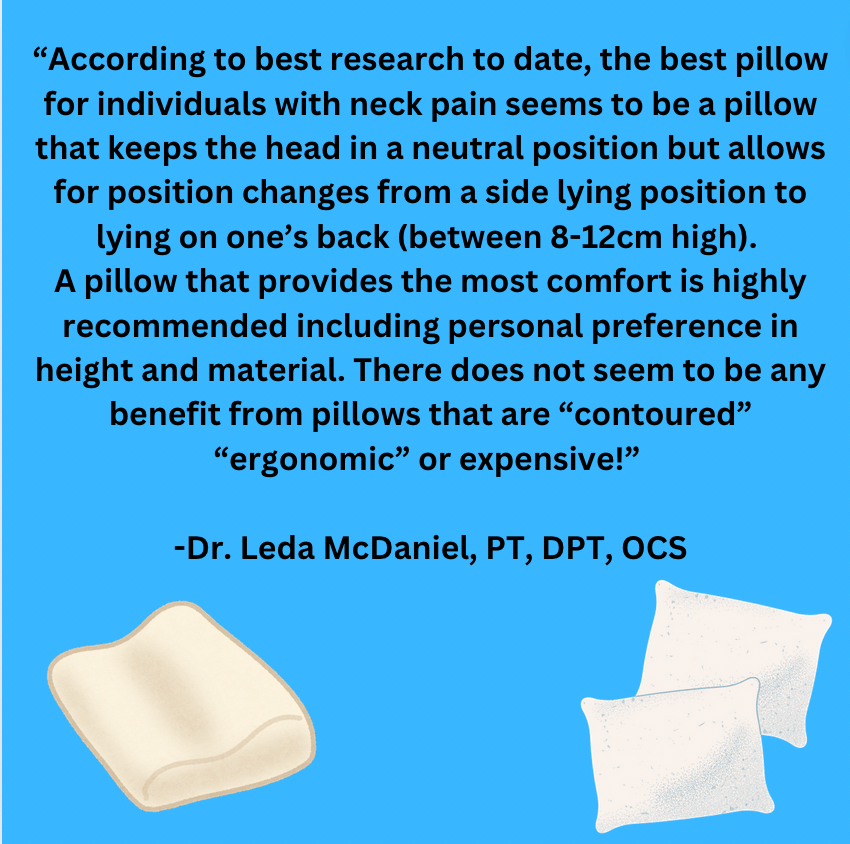
See the main takeaways and chart below for some key points that I gleaned from the research:
What do pillows and running shoes have in common?!
What do pillows and running shoes have in common?! COMFORT is the most important part! This finding throughout the research on best pillow choices for neck pain reminded me of the hotly debated topic of which running shoes are best. The takeaway from all the fancy technology and running shoe options is this: the most comfortable shoe is the best for injury risk reduction (i.e., NOT the shoe matched to your “foot type” or how much you pronate (Agresta, 2022).
So, what IS the best pillow choice?
A few key points that I have learned that will now inform my advice to patients with neck pain:
The best pillow to improve your neck pain does NOT have to be expensive and does not have to hold your neck in the perfect position. I am now more comfortable and confident in giving this advice to my patients. In most cases the fancy cervical “ergonomic” pillows may not be a great choice and a modest, relatively flat (no more than 10cm tall) pillow that can accept the weight of your head without collapsing is probably best! I hope this knew found knowledge will help you rest easy. Oh yeah, and remember that comfort is KING AND QUEEN when it comes to pillow choice!
References:
Agresta C, Giacomazzi C, Harrast M, Zendler J. Running Injury Paradigms and Their Influence on Footwear Design Features and Runner Assessment Methods: A Focused Review to Advance Evidence-Based Practice for Running Medicine Clinicians. Front Sports Act Living. 2022;4:815675. doi:10.3389/fspor.2022.815675
Cai D, Chen HL. Ergonomic approach for pillow concept design. Appl Ergon. 2016 Jan;52:142-50. doi: 10.1016/j.apergo.2015.07.004. Epub 2015 Jul 28. PMID: 26360205.
Fazli F, Farahmand B, Azadinia F, Amiri A. The Effect of Ergonomic Latex Pillow on Head and Neck Posture and Muscle Endurance in Patients With Cervical Spondylosis: A Randomized Controlled Trial. Journal of Chiropractic Medicine. 2019;18(3):155-162. doi:10.1016/j.jcm.2019.02.003
Her JG, Ko DH, Woo JH, Choi YE. Development and Comparative Evaluation of New Shapes of Pillows. J Phys Ther Sci. 2014;26(3):377-380. doi:10.1589/jpts.26.377
Lei JX, Yang PF, Yang AL, Gong YF, Shang P, Yuan XC. Ergonomic Consideration in Pillow Height Determinants and Evaluation. Healthcare (Basel). 2021 Oct 7;9(10):1333. doi: 10.3390/healthcare9101333. PMID: 34683013; PMCID: PMC8544534.
Pang JCY, Tsang SMH, Fu ACL. The effects of pillow designs on neck pain, waking symptoms, neck disability, sleep quality and spinal alignment in adults: A systematic review and meta-analysis. Clinical Biomechanics. 2021;85:105353. doi:10.1016/j.clinbiomech.2021.105353
Vanti C, Banchelli F, Marino C, Puccetti A, Guccione AA, Pillastrini P. Effectiveness of a “Spring Pillow” Versus Education in Chronic Nonspecific Neck Pain: A Randomized Controlled Trial. Physical Therapy. 2019;99(9):1177-1188. doi:10.1093/ptj/pzz056
Yamada S, Hoshi T, Toda M, Tsuge T, Matsudaira K, Oka H. Changes in neck pain and somatic symptoms before and after the adjustment of the pillow height. J Phys Ther Sci. 2023;35(2):106-113. doi:10.1589/jpts.35.106
 sapiens movēs